Showing posts with label China. Show all posts

Friday, 7 September 2012

China’s housing bubble: moving towards logic


It begins as it always does. With someone getting a little extra money.

So they think, what do they do with it?

Well in China, they could put it in the bank, but interest rates are lower than inflation.

They could put it in the stock market, but the only people who make money there are insider traders.

Sending it overseas to invest is difficult to say the least, due to China’s control of the capital account.

Well, it would be nice to upgrade to a better apartment they say, so they decide to buy a new house to live in.

Marvellous! So they buy a house, and their similarly rich friends also buy houses. Suddenly house prices are rising and the market is looking good.

And China's rapidly growing economy means people are making more money! But what should they do with that?

How about investing in property? Don’t worry about renting it out, rents are low, and renters will just spoil the place. Buy property and hold onto it purely for price gain.

Well prices are still rising, and there’s a great apartment deal across town. Luxury apartments (expensive, but high returns expected), 20 minutes from town, right next to the subway station. It looks a steal. They buy in.

It is a steal. Prices keep rising and they quickly amass a fortune.

Up and coming families then get jealous of others' wealth. The luxury apartments 20 minutes from town are very expensive now, but there’s some nice ones 40 minutes from town, a 20 minute bus ride to the subway.

So they pool their money together, take out a loan for the other 50% of the property value and buy in.

And they make money too! The loan is quickly paid off, and the family is rejoicing in riches.

People are making more and more money. And there are still no good investment options other than property.

So they keep pouring more money into luxury apartments. They take out a 50% loan and buy a luxury apartment where? Oh who cares where! They all make money. Some even buy properties in the middle of the desert... (http://molldrew.blogspot.com.au/2011/07/lost-city-of-ordos.html)

Ordos, housing for 1.5 million people, Population: not that many

And so, China builds a property bubble where the richest buy luxury apartments built purely for capital gain.

So the bubble continues on and on. But what happens if the dream ends? What happens if people start getting scared that luxury property prices are going to fall?

Well that's where we are now. The central government saw the bubble emerging and instigated a slowdown. This pricked the confidence of the housing market. And the impacts are noticeable, with the Real Estate Climate Index in China now at a lower level than during the Global Financial Crisis.

But is this a bad thing? Well strangely enough, probably not.

For starters, this housing downturn is unlikely to trigger a financial collapse like the US one did. Most housing loans are only for 50% of the house value, so house prices would need to drop at least 50% for most buyers to be tempted to default on the loan. This would only occur in the worst type cases.

Some developers will likely go bankrupt and owe banks money. But, with China's big 5 banks making combined profits of around US$100 billion over the past year, they can afford to lose out on some loans.

The advantage of the downturn is that it helps people think logically. A downturn reminds investors that they can lose money on housing. This will make people think less about luxury apartments and more about what to invest in to make a solid return in the future.

So, do good housing projects still exist?

Yes. The interesting thing about this housing bubble is that there is still strong demand for Chinese housing, as this recent paper by the Reserve Bank of Australia ascertains. (http://www.rba.gov.au/publications/rdp/2012/pdf/rdp2012-04.pdf) However, demand is coming from middle-income families who want a house to live in. These people can't afford the already-built luxury apartments, but are interested in smaller, cheaper apartments with reasonable access to utilities.

Previously developers shunned middle-income housing because it didn't make the same profits as the luxury apartment bubble. However, with profits in luxury apartments disappearing, their best source of revenue will become medium-cost housing.

So strangely, by aligning what developers build with where the owner-occupier demand is, this housing slowdown could be the best thing that could have happened in China.

Disclaimer: This blog reflects my personal views and does not reflect those of any organisation I am associated with.

Sunday, 27 May 2012

Favourite cheapish hotels in China


This is a rough guide of our favourite hotels from our travels around China.

Firstly I should start with we are not that picky. We like hotels that are cheap, clean, well located, and have easy internet access. Anything else is a bonus.

We have only included hotels we liked. If we thought they were okay, we left them out, thinking you would be better off trying a random one on CTRIP or ELONG.

Take our advice as trying to help, but at your own risk.

Beijing

Home Inn Dongzhimen


Location, location, location. Right next to major subway station, bus terminals (to the Great Wall etc). Sanlitun and some tasty restaurants (our Sanlitun food guide) are just a walk away.

Chengde, Hebei

Bifeng Hotel


Short walk to the glorious Chengde Mountain Resort, our room had mirrors on the ceilings. Tip: Don’t be late with your time of arrival. We were 30 mins late and the receptionist seriously considered cancelling our booking! Note: the entrance is around the side/back from where you would expect.

Chengdu, Sichuan

Home Inn People’s Park


Next to the charming People’s Park that is lovely for a sit-down for a pot of Sichuanese tea. The café in the hotel does a good beef noodles.

Dongsheng, Inner Mongolia

Hongye Hotel


A great stop-off point for viewing the wonders of Ordos.  The hotel has close bus connections to Ordos, and if you walk east, you can find the heart of the city, with charming restaurants and a big public square.

Guangzhou, Guangdong

Guang Dong Bai Yun City Hotel


A little noisy next to the train station, but near the wonderful Yuexiu Park, which I can walk around for days.

Hong Kong

Silka West Kowloon


If you want a step up from Chungking Mansions, this is the place. Cheap (for HK), close to the subway, and a moderate walk to sites including the Temple Street Night Markets. Great breakfast.

Jiuzhaigou, Sichuan

Youu Hotel


This quirky hotel/hostel is pretty, with interesting furnishings, friendly English speaking staff. Short taxi ride to Jiuzhaigou.

Kashgar, Xinjiang

Seman Hotel


This oddly named hotel has some great qualities. Nicely located, a wonderful restaurant with healthy safe-to-eat food, and they organise trips to the Himalayas and bordering countries.

HOWEVER, nearby is a Pakistani restaurant that is recommended in some guidebooks. As seasoned Chinese travellers, we went there, had the meat dish and were VIOLENTLY ill for 2-3 days, and remained sick for a week.

Qingdao, Shandong

Starway Hotel Qingdao Beer Museum


Well located for the Beer Museum, an extensive street market and vendors who will happily sell you beer in a bag, this hotel is cheap and has great service.

Sanya, Hainan

Huaxin Hotel


5 minute walk to beach, fresh fruit in the room each day. Yum! Note: Staff very inexperienced about registering foreigners to stay.

Shanghai

Starway Jiaxin Hotel


This isn’t a hotel for someone who wants to be in the centre of Shanghai. It is about 15 minutes from the centre, right next to two train lines. What I particularly like about this hotel is its surroundings. Walking around nearby will take you to a wide variety of restaurants. (Fast food close by, Chinese different cuisine if you go further) Avoid hotel breakfast.

Turpan, Xinjiang

Name unknown

Go to the Turpan bus station, and on Lao Cheng Xi Lu go west 100 metres. The hotel is on the north side of the street, roughly opposite the market entrance.

Good air conditioning (a must for Turpan’s 45C summer), cheap (RMB150/night for 2 rooms shared by 5 people), and well located opposite the main markets.

Xiamen, Fujian

Gulang Villa Hotel


Relatively expensive yes, but Gulang Villa Hotel is located on an island with a lovely European village-feel. Surrounded by fish restaurants, it is a great place to get away from people (in winter at least, it’s probably packed in summer!)

Yangshuo, Guangxi

Yangshuo Regency Holiday Hotel


Well located, stunning views out your window and a solid breakfast.

Friday, 23 March 2012

A Hong Kong pictoral: Whitening fetish, public voting and taking photos


Advertisers: Stop the whitening fetish!


Cathay Pacific magazine: Halfway down – “fair face is the best canvas for any style”

The whitening craze in HK has hooked advertisers, with products offering whitening this and whitening that.  I can let this go up to a point, but when Estee Lauder have a Chinese supermodel say a “fair face is the best canvas for any style”, I question the company’s ethics.  Asian women should not feel that a natural darker skinned face cannot be a beautiful canvas.

Public voting


In Hong Kong, only a selected minority (1,200 HK residents) get to vote in the Chief Executive election held on Sunday.  However, some citizens are pushing for HK to move towards democracy.  To further their cause, enterprising HK democrats have set up a website where HK residents can vote for one of the three choices (shown in the picture above).  The website is secure, ensuring a fair voting process.  Website operators hope that 50,000 HKers will vote, but judging by their advertising, the vote may be considerably higher.  In typical China bluntness, the mainland bureau in HK has complained that the public vote makes a mockery of the actual non-representative election.

Taking photos


This storefront refers to a recent HK scandal where a shop allowed rich mainlanders to take pictures of a shop’s storefront, but banned local HKers from doing so.  Mainlanders have been coming to HK in recent numbers (28 million in 2011) largely to take advantage of the zero sales tax rate.  The number of mainlanders has caused concerns in HK due to cultural differences, perceived unequal treatment, and mainlanders seeking HK social benefits.

Tuesday, 15 November 2011

What did you learn in China? Part 3 of 3

When going to China, I felt that I was going there to have awesome experiences and learn from them. The awesome experiences did happen (and how!) but recently the question of what I learnt in China came to mind. It is nice to do all this overseas travel, but you would hope to learn something while you are doing it!

With some thinking, I realised that there were nine major lessons that I have learnt from China. I have divided them into three parts, and will tell you the lessons I learnt, and the experiences that led me to learning the lesson.

In this third part of the series, I look at my final three lessons, and finish on a photographically diverse note.

Lesson 6: People are more similar than you think.

Chinese citizens are often categorised by foreigners as being inherently different people. In reality, I think Chinese people are similar to Western people. The best place to see it is a summer weekend's visit to the Olympic Forest Park. Watching local Chinese people have picnics with their families, laze in hammocks and enjoy the tranquility really made me realise that Chinese people have the same simple wants and desires as everyone else.

Chinese people are extremely helpful. The greatest help I recieved occurred early in my stay in Beijing. I was standing on a bus, and for whatever reason, not hanging on.  The bus, which was going at quite a pace, suddenly braked, and I went flying, literally flying towards the front of the bus. Around me I could hear the audible gasps of everyone alarmed by my predicament. I was waiting to meet my doom when suddenly a pair of arms came from nowhere and grabbed me. I said a very grateful 'xie xie' to the face of the 40-year old man connected to the arms, and he gave me a 'think nothing of it' gesture in response.

(Addendum: Having had someone save me once, I did get a chance to save someone back at the Beijing Olympic Water Park. A young woman about 4'10" tall swam out to the deep end (6 feet) of the pool, panicked and started flailing. I was the closest person to her, so I grabbed her and carried her into safety. She was very grateful, and asked the obligatory 'what country are you from' question. She probably now thinks all Australians are lifeguards.)

Lesson 7: Go explore!

The best way I could think of showing the benefits of exploring around China was not in words, but rather pictures showing the different experiences Molly, I and some of my friends (Ashly) took part in.

Grasslands near Hohhot, Inner Mongolia
Snow Day at Mutianyu Great Wall, Beijing

Sichuan Tea House, Renmin Park Chengdu, Sichuan

 Jiuzhaigou, Sichuan

Guiyang Monkey Park, Guizhou

Buddhist Grotteos, Datong, Shanxi

Harbin Ice Festival, Heilongjiang

 Rides at Jiayuguan Amusement Centre, Gansu

 Flaming Mountains, Turpan, Xinjiang

Melbourne Cup Day Turtle Races, Beijing


Saturday, 12 November 2011

What did you learn in China? Part 2 of 3


When going to China, I felt that I was going there to have awesome experiences and learn from them.  The awesome experiences did happen (and how!) but recently the question of what I learnt in China came to mind.  It is nice to do all this overseas travel, but you would hope to learn something while you are doing it!

With some thinking, I realised that there were nine major lessons that I have learnt from China.  I have divided them into three parts, and will tell you the lessons I learnt, and the experiences that led me to learning the lesson. In this second part, I look at three more lessons.

Lesson 4: Putting yourself out there and making mistakes makes life fun.

Learning Chinese is the classic example of how putting yourself out there can make life more interesting and fun.  Practising your Chinese with cab drivers provides you with a personal view of the lives of ordinary people in Beijing.  Molly’s favourite cab-driver had a wonderful 30 minute discussion with her, with him telling her that his wife was pregnant, and that he didn’t care whether it was a boy or girl.

One day Molly, Adrienne and I decided to go to Huanghuacheng, a section of the Great Wall none of us had been to before.  After taking an indirect route by buses, we arrived and were faced with a climb up a scary rickety 20 foot ladder.


Climbing the rickety ladder, not attached at the top or bottom!

Having braved the ladder, we went on a lovely walk on a section with barely a tourist in sight.


At the end of the walk, we decided we did not want to go back down the rickety ladder, and instead took a different path.  However, the further we went down the path, the louder we heard dogs howling.  While we were scared, the prospect of the ladder forced us onwards.  We found an old Chinese guy at a fence with a group of dogs, saying it was private property and we needed to go back.  RMB60 later, we continued down the path and found the bus stop, and that’s where the story gets interesting.

You see there was only one bus left that day, and we had to stand on one side of the road to get it.  However, there was only cover on one side of the road, and that wasn’t on the same side.  Five minutes after we arrived at the bus stop, it started raining heavily.  The clouds darkened the sky and we could only see headlights coming down the road towards us.  We retreated to the sheltered side, but any time we saw a vehicle, we madly dashed across the road to be ready to catch it. Five or six times we dashed across the road when a vehicle came, only to be disappointed.  By the time the bus arrived, Molly and I were totally drenched, but after a good wringing out of our clothes on the bus, we were in good spirits.


 The bus stop in the five minutes before the impending doom..

Unfortunately for us though, the last connecting bus to Beijing had already left.  In the end, we accepted an offer from an illegal taxi and set off on the way home.  We cruised along for a while and were well into playing a travelling game when suddenly the taxi started breaking down. The driver pulled to the side of the road, checked under the bonnet and off we went again.  We then arrived at a toll booth, the taxi driver slowed down and could not get the taxi going again.  The driver told Andrew to get in the driver’s seat and steer, while the driver and the tollbooth operator pushed the taxi out of the toll booth to the side of the road.  Thankfully the taxi then started working and we made it home, having been lost, drenched and broken down in the middle of nowhere, but still having had an amazing experience.  How many foreigners get to drive a taxi in Beijing?

Lesson 5: You will always have problems.  The challenge is to enjoy life despite them.

In our final months in China, we experienced some major issues in relation to job changes and immigration.  Despite these issues causing considerable stress, we still took some time to go out and enjoy ourselves.  Our journey to the Fangshan Line (link: http://molldrew.blogspot.com/2011/07/fangshan-line-world-park-and-cool.html) and the Amazing Beijing adventure race (link: http://molldrew.blogspot.com/2011/05/amazing-beijing-adventure-race-round-1.html) occurred during this stressful period, and gave us a great boost during a difficult time.

Sunday, 6 November 2011

What did you learn in China? Part 1 of 3


When going to China, I felt that I was going there to have awesome experiences and learn from them.  The awesome experiences did happen (and how!) but recently the question of what I learnt in China came to mind.  It is nice to do all this overseas travel, but you would hope to learn something while you are doing it!

With some thinking, I realised that there were nine major lessons that I have learnt from China.  I have divided them into three parts, and will tell you the lessons I learnt, and the experiences that led me to learning the lesson.

Lesson 1: Don’t worry about problems. You will be surprised what you can overcome.

How did I learn this?

  • Thrusting yourself into a country that speaks a foreign language is always going to produce issues.  One of our largest was trying to register at the police station.  In China foreigners need to take their passport, rental contract and landlord’s ID number to register at the local police station.  Failure to do so makes renewing your visa difficult, if not impossible.   In one house that we lived the landlord steadfastly refused to give us his ID number.  Presumably as a tax dodge, the landlord came up with a stream of excuses as to why he couldn’t give us the number, including that he had lost his ID and didn’t intend on replacing it.  All seemed lost, until we complained to a policewoman about our problems.  She contacted our real estate, told them to solve the issue and we had the ID number within two minutes.

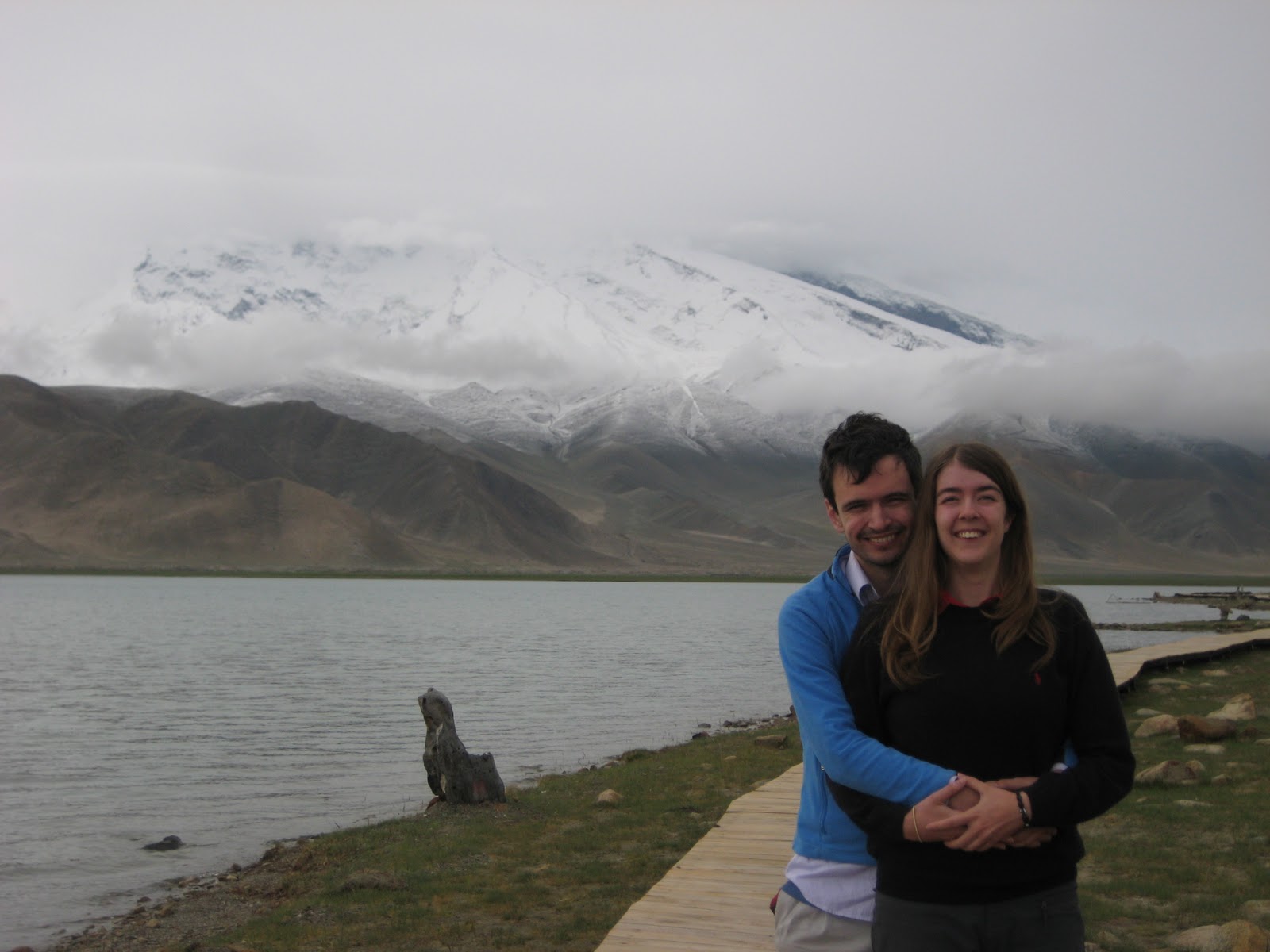
  • Most people who have lived in China for an extended period have one horrible food poisoning story.  Molly and I had ours in one of the most beautiful places in the world.  We had travelled up to Lake Karakul, high in the Himalayas bordering Kyrgyzstan.  Suffering altitude sickness, and having struggled to hold food down for two days, Andrew H was in a terrible state, but was nothing on Molly.  Molly was in deep trouble if we did not get foods into her quickly.  We headed into the restaurant, only to find out they were out of everything except tasteless buns, a bland seaweed soup and rice.  For two hours, Andrew H nursed Molly, feeding her the concoction.  It was a scary and difficult time, but we did enough to keep Molly going.  Thankfully by the next morning we had recovered enough to enjoy the stunning scenery.  (many thanks to Andrew S for all he did for us in this tricky time)


The aftermath at the glorious Lake Karakul

Lesson 2: The world is not stable, but instability can bring amazing opportunities.

How did I learn this?

  • China jobs for expats have a habit of disappearing or changing with little notice.  At one stage my job was suddenly changed and I was left vulnerable. Luckily I quickly found a job at the Department of Agriculture.  Working at the Agriculture office for five and a half months was a wonderful experience.  Amy, James, Nancy and Cindy created a positive work environment that was only punctured by regular games of table tennis.


DAFF staff - Great working environment, and then great people to hand around with (Sadly no picture of Nancy - too busy playing table tennis!)


  • Beijing is an amazingly flexible city.  Go away for a week and you’ll come back to find half the shops had changed hands  and your favourite ice cream place has shut down.  The change did provide benefits however, encouraging you to go out and explore the changes and find yourself a new favourite ice cream shop.

Lesson 3: Abject poverty still exists, and we are fortunate to avoid it.

How did I learn this?

  • People beg in developed countries, but the sheer scale of poverty only hits home when you are in a developing country.  Missing limbs and burnt skin are common among Chinese beggars, but the strongest impact anyone had on me was a lady who often lay near Tuanjiehu station in eastern Beijing.  She was young, but could not / would not stand, as the burns across her body were too severe.  In Australia, she would be treated and would probably lead a relatively normal life. In China, she is left to beg on the streets.

  • China’s governance system leaves local governments with low tax revenues and high spending requirements.  To make up the gap, local governments seize farming land, selling it to developers for a fat profit.  The displaced farmers are given minimal compensation, leading many to end up in poverty.  Other farmers are left fearing the government could seize their property at any moment.


Friday, 12 August 2011

Super-currency: The next Esperanto?

US debt problems have led the Chinese authorities to be increasingly concerned over the risks associated with using its foreign currency reserves to buy US Treasury Bonds.

On several occasions leading Chinese officials, including head of the People's Bank of China Zhou Xiaochuan, (see link) have proposed introducing a super-currency for government debt. The super-currency would not be a currency of an individual country or region, but rather a currency for all countries priced on a weighted average of the major world currencies.

While a nice sounding idea, a super-currency is the equivalent of creating the language of Esperanto. A super-currency would add another layer of financial complexity without solving anything. In either of the two situations below, the benefits of a super-currency are limited.

Situation 1: The RMB is not one of the weighted currencies for the super-currency.

The Chinese Government attempts to balance the risks of their foreign currency reserves by using a mix of currencies. While China could use a super-currency to balance the risks, purchasing treasury bonds from a variety of countries in a variety of currencies could produce a similar result. For example, buying reserves in a super-currency weighted at 50% US Dollar, 30% Euro, 20% Yen would produce similar results for China to placing 50% of its reserves on US Treasury bonds, 30% on Euro bonds and 20% on Yen bonds. Purchasing bonds from around the world would be simpler and less costly than setting up a new currency system.

Situation 2: The RMB is one of the weighted currencies for the super-currency.

If the RMB were one of the currencies used to weight a super-currency, China could experience negative financial effects. If foreign countries use the RMB to hold reserves, demand for RMB will increase. With China operating a controlled exchange rate, an increase in demand for RMB will lead to China accruing more foreign exchange reserves. Increasing foreign currency reserves seems a counter-intuitive solution to decreasing the risks associated with the reserves.

Saturday, 30 July 2011

Wenzhou train tragedy: A teething problem for new high speed rail?


On 23rd July 2011, two D-category trains (top speed 250 km/h) crashed into each other in Wenzhou, Zhejiang province. 40 people were killed in this tragedy.

While thorough investigation is required, this tragedy should not be seen as a teething problem for the recent additions to the China’s high speed train network. D-category trains:

  • have been in operation in China since 2007. The track where the accident occurred had been in use since 2008.

  • are common and well tested throughout China. In 2011, D-trains leaving or arriving in Beijing will travel a combined 34.3 million kilometres (21.4 million miles).

  • have suffered no other reported accidents since their introduction.

While the new G-category trains (top speed 300 km/h) trains have suffered some teething problems the implemented safety systems have worked successfully.

In reporting on the incident, the Chinese Government should focus on the differences between the G-category trains and the D-category trains. The train incident should be reported as an isolated tragedy that has occurred after three years of successfully implementing D-category trains.

Tuesday, 19 July 2011

The Lost City of Ordos

 Our travels around China has taken us to some interesting places. While there have been more beautiful places, none has been more interesting and different than the lost city of Ordos, Inner Mongolia.

    Ordos is not a Doctor Who world over-run by Daleks, but the home of China's biggest property development mistake. About ten years ago, the coal-rich Ordos Government became concerned that the thriving town of Dongsheng (population 300,000) was running out of water. Rather than improving the piping, they decided to build a new city called Ordos (Kangbashi) 20 kilometres down the road next to reserviors. The Ordos Government had images of turning Ordos into a Chinese Dubai, a state-of-the-art city for over a million people. While building plans were impressive, they failed to consider that Ordos's outback location and freezing tundra temperatures may discourage potential residents.

    Recently the Chinese media ran stories claiming Ordos was a ghost town. (http://www.chinadaily.com.cn/cndy/2010-06/10/content_9958768.htm). Having heard about this place, we definitely had to go see it for ourselves to determine (i) whether the stories of the empty streets were true and (ii) whether we thought the Ordos situation was unique or could be repeated across China.

    On arriving in Ordos on a Friday working day in the middle of summer, two things immediately caught our attention. The first was how cold it was. For the middle of summer we were practically freezing. Hardly Dubai temperatures! The second was the scarcity of people. While there were people around the bus stops, otherwise the city was very quiet. We have both recently been reading books and articles on North Korea, and the empty roads reminded us of what we had read about North Korean cities.


    We spent a considerable amount of time over two days walking the streets of Ordos. There were about 15 convenience stores, many home renovation stores, a few small hotels and one supermarket open. The supermarket had a few customers and a reasonable array of products.


    The state-of-the art buildings being built in Ordos are amazing. We renamed the most interesting ones The Cake (Ordos Theatre), The Leaning Tower of Books (The "Great" Library of Ordos) and the Blob (Ordos Art Museum). Only the Leaning Tower of Books has been opened, with some books, a massive collection of magazines and Mongolian writings on display. The Leaning Tower of Books was definitely being underused, with more staff than customers.

The Cake

The Leaning Tower of Books , The Blob and an excited Molly!


    Overall Ordos is an interesting city, created by a coal-rich local Government that wanted to make a statement. It may suceed, if enough money is thrown at the problem. Andrew has a bet with Molly that the National Government will attempt to save face by making Ordos the provincial capital of Inner Mongolia within the next 20 years.

    Is Ordos indicative of what is happening in the rest of China? From our travelling to over 20 Chinese provinces we have seen considerable over-building. However, the concept of building a Chinese city from scratch is rare. While local governments have acquired a large amount of infrastructure funding from their local financing vechiles, only the richest local governments would have sufficient funds for the enormous costs of building a new city. We think that while badly built housing projects may cause problems around China, no other construction development problem is as systemic and large as the lost city of Ordos.

    Getting there: We recommend staying in Dongsheng and bussing to Ordos since you will quickly run out of things to do in the evenings in Ordos. You take the K21 (RMB8) from the Dongsheng train station to Ordos (Kangbashi) (Last bus back around 7pm-8pm). We stayed at the Hongye Hotel in Dongsheng (Hotel address: 6 Hangjin North Road (Hangjin Bei Lu),E'erduosi.

Hotel address in Chinese: 杭锦北路6,鄂尔多斯 ) which you can find on C-TRIP and was reasonable with a great Chinese breakfast. From the hotel walk south to the traffic lights and then west and in front of the hospital you can catch the K-21 to Ordos.

In Dongsheng, buy a map since it will probably also contain a map of Ordos.

In Dongsheng, east of the Hongye Hotel is far more lively than West. There is a lovely square about 1km east of the Hongye Hotel (which Molly and I lindy-bombed!) and there are a collection of hot pot resturants in the vicinity.